What is Passover in the Bible, origin and fulfillment in Christ the Lamb

Bible Studies

What Is Passover In The Bible?

One night in Egypt, blood on a doorway meant the difference between life and death. Centuries later, that same picture would explain the whole gospel. Here is the story, and its stunning fulfillment.

Start Here

Passover is one of the oldest and most important stories in the Bible, and it is far more than an ancient Jewish holiday. It is the moment a people were rescued from slavery, and it became the picture God would use, centuries later, to explain what Jesus came to do. To understand Passover is to understand the gospel in miniature. So let us walk through it, the night itself, what every piece meant, and the astonishing way it all points to Christ.

What is Passover in the Bible? Passover is the festival remembering the night God rescued Israel from slavery in Egypt. God told each family to sacrifice a spotless lamb and mark their doorposts with its blood. That night, judgment fell on Egypt's oppression, but wherever the blood was, death passed over the home. It is a story of mercy meeting judgment, and rescue winning. And the New Testament reveals that Jesus is the true Passover Lamb, whose blood rescues us for good.

That is the whole arc in a sentence. Now let us slow down and see why it is so beautiful, because the details are where the gospel shines through.

The Word

What Passover Actually Means

The name itself carries the whole story. It comes straight from the Hebrew word for what God did that night.

פָּסַח

Pasach

pah-SAKH

A Hebrew verb meaning to pass over, to spare. When God saw the blood on a home, He passed over it, sparing the life inside. Some scholars note a second shade of meaning too, to hover over or shield, a picture of God protectively covering His people through the night of danger.

Hold onto that second image for a moment, because it reframes the whole night. This was not God grudgingly skipping certain houses. This was God standing guard over them. The blood on the door was not a charm to keep an angry God away. It was the sign of a rescuing God drawing near to protect. That distinction matters, and it runs through the entire story.

Mercy, Not Fear

It would be easy to read Passover as a scary story about a wrathful God. But look closer. God is not lashing out at random. He is dismantling a brutal system of slavery and shielding the vulnerable through it. Passover is fundamentally a rescue. The heart of it is mercy, and a God who makes a way out where there seemed to be none.

The Night Itself

Exodus 12, Piece By Piece

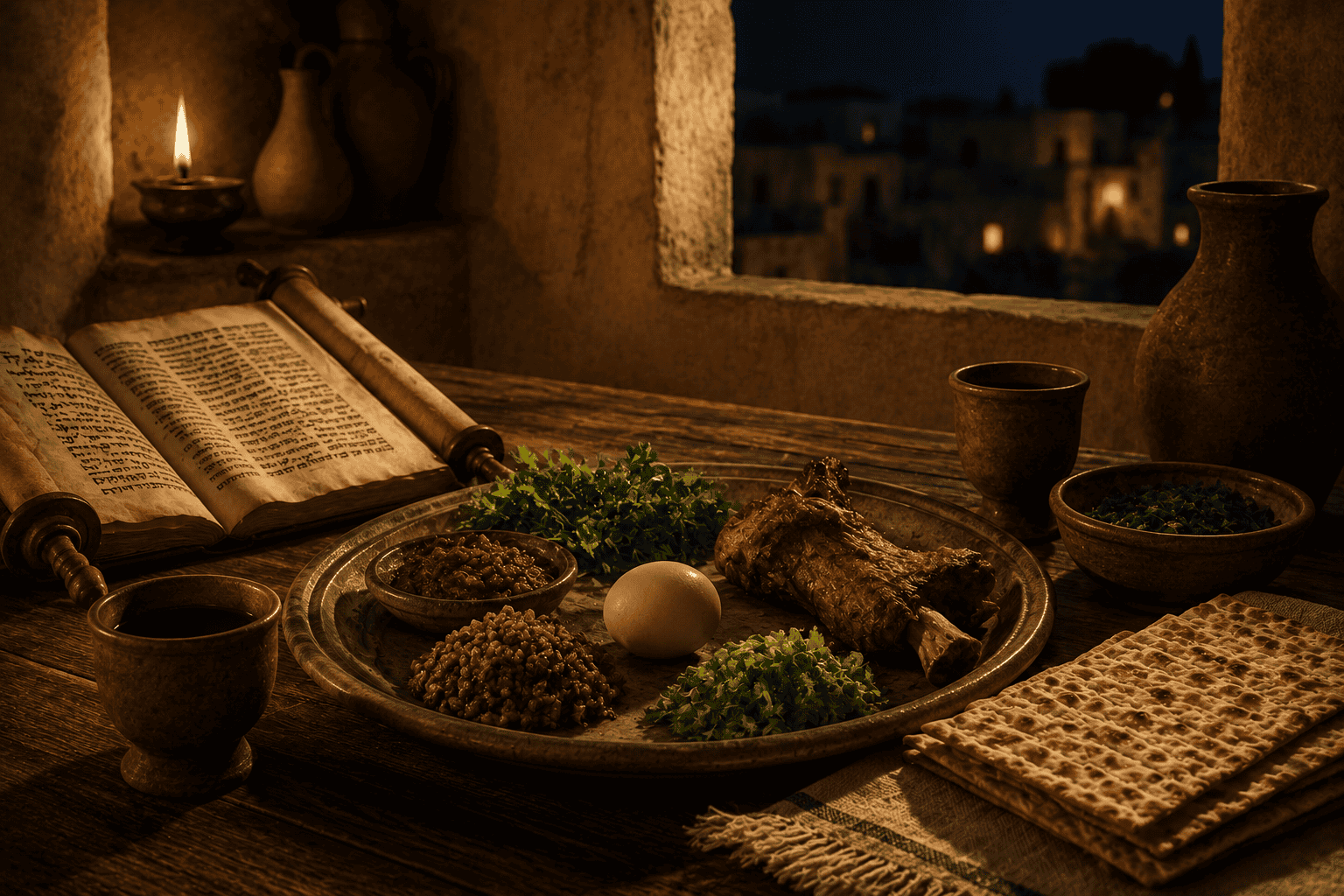
Every element of that first Passover meal carried meaning, and God was specific about all of it. These were not random rituals. Each one was a piece of a message God was teaching His people to remember forever.

The Lamb

A lamb without blemish, spotless and unbroken. Its life was given so the family could live. Substitution, an innocent life in the place of another, sits at the very center of the night.

The Blood

Placed on the doorposts as a visible sign of trust. Where the blood was, the home was safe. It marked out a people who belonged to God and were under His protection.

Unleavened Bread

Bread with no yeast, made in haste because there was no time to let it rise. It taught readiness, a people packed and prepared to follow God out the door the moment He said go.

Bitter Herbs

A taste of the bitterness of slavery, eaten so no one would ever forget what they had been rescued from. Memory and gratitude, built right into the meal.

Then God did something remarkable. He commanded that this night be kept every year, retold to every generation, so that children would ask what it meant and parents would answer with the story of rescue. Passover was not just an event. It was a memory God built to keep His people rooted in the truth that they were a rescued people, freed not by their own strength but by His mighty hand.

Why The Details Matter

A spotless lamb. Its blood as a sign. Substitution, an innocent dying so the guilty could go free. Hold every piece of this in your mind, because in a moment you will see all of it again, gathered up and fulfilled in one Person. God was not just rescuing Israel. He was painting a picture He would complete centuries later.

The Fulfillment

Christ, Our Passover Lamb

Here is where the whole story lands, and it is breathtaking once you see it. Fast forward roughly thirteen centuries. Jesus gathers His disciples in Jerusalem to celebrate Passover. And during that very meal, the meal about a lamb whose blood rescues, He takes the bread and the cup and says something that reframes everything. This is my body. This is my blood of the covenant. He was not abandoning Passover. He was revealing that He is what it was always about, and within hours He would carry it to the cross, where His words from the cross would finish what that meal began.

Cleanse out the old leaven that you may be a new lump, as you really are unleavened. For Christ, our Passover lamb, has been sacrificed.

1 Corinthians 5:7

Read that against everything we just walked through, and watch every piece click into place. The spotless lamb was pointing to the sinless Christ. The blood that rescued from death was pointing to His blood, poured out to rescue us for good. John the Baptist saw it coming and called Him the Lamb of God who takes away the sin of the world. Passover was the shadow. Jesus is the substance.

A lamb without blemish
→
Jesus, the sinless Lamb of God
Blood on the doorposts
→
His blood that covers and rescues us
Rescue from slavery in Egypt
→
Rescue from the slavery of sin
A meal to remember, every year
→
The table where we remember Him

This is why Christians read the Old Testament and find Jesus on nearly every page. The whole story was always heading here. For a fuller look at how the Last Supper became the doorway into a whole new relationship with God, our study on the new covenant picks up exactly where this meal leaves off.

A Crucial Clarification

Blood As Gift, Not Rage

We have to pause on one thing, because it changes how you read this whole story. When the Bible talks about blood and sacrifice, some people picture an angry God who needs to be satisfied with violence before He will calm down. That is not the God of Passover, and it is not the God revealed in Jesus.

Look at who provides the lamb. In Egypt, God is the one who gives the instructions, who provides the way of rescue, who protects. And at the cross, it is not that an angry God took it out on Jesus. It is that God Himself, in Christ, stepped into the story and gave His own life to rescue us. The blood was never about satisfying divine rage. It was always about divine self-giving. Love laying itself down.

The Heart Behind It

Passover is not the story of a God who is hard to please. It is the story of a God who provides the rescue Himself, at His own cost. The lamb was always God's gift to His people, not their bribe to Him. And the cross is the same, God giving Himself so that we could go free. That is not wrath. That is the deepest love there is.

This is why we can look at the whole arc, from Egypt to the cross, and see not terror but rescue. God's justice in Passover confronts real oppression and sets captives free. His deepest aim is never to destroy but to deliver, to heal a world and bring a people home. To meet that God as He truly is, our reflection on being covered by the blood of Jesus carries this same thread of protection and grace.

The Application

Clean Out The Old Leaven

Notice that when Paul calls Christ our Passover lamb, he does not stop at doctrine. He turns it straight into how we live. The unleavened bread of Passover becomes a picture of the kind of life the rescued are meant to live.

Let us celebrate the festival, not with the old bread leavened with malice and wickedness, but with the unleavened bread of sincerity and truth.

1 Corinthians 5:8

Just as Israel cleared every trace of yeast from their homes before Passover, Paul says, clear out the old stuff from the house of your heart. The malice, the deceit, the grudges, the hidden corruption that quietly spreads like yeast through dough. Not to earn God's rescue, that is already given, but because rescued people are meant to live free and clean and honest.

Made Practical

This is gentle, ongoing work, not anxious self-punishment. It looks like forgiving someone you have been holding a grudge against, telling the truth where you have been hiding, making peace where there has been conflict. The Lamb has already rescued you. Clearing the leaven is simply learning to live like the free person you now are.

And because the rescue is finished, you can do this heart-work without shame. You are not scrubbing to be accepted. You are already accepted, and now you get to become, more and more, the honest and whole person grace is making you. This is the practical shape of living in God's grace.

A Word Of Honor

Honoring Israel And The Feast

One honest note, because it matters. As the centuries passed, the church and the Jewish people drifted apart, and the way Christians came to mark the resurrection got deliberately separated from the Jewish Passover. At the Council of Nicaea in 325, church leaders set the date of Easter to stand independent of the Jewish calendar, and some of the language used at the time about the Jewish people was genuinely ugly and contemptuous.

We name that plainly and lament it. Any contempt toward the Jewish people is a betrayal of the very gospel that came through them. Jesus was Jewish. The first Passover He fulfilled was Israel's. The whole story we have been telling is rooted in God's faithfulness to a specific people He has never stopped loving.

The Posture We Choose

So we hold this with humility and gratitude. We honor the Jewish roots of our faith, we give thanks for the Passover story that carried the gospel to us, and we reject every trace of contempt. If you are ever invited to a Jewish Seder, go as a grateful guest and a learner, not to borrow the ritual, but to honor a people and a story God has woven our own hope into.

Where It Lands

The Story That Explains Everything

So, what is Passover in the Bible? It is the night God rescued a people from slavery with the blood of a spotless lamb, and it is the picture God gave the world to explain the greater rescue that was coming. Every piece, the lamb, the blood, the rescue, the meal, was always pointing forward to Jesus.

That is the good news at the heart of it all. The judgment that fell in Egypt fell on oppression, and God's people were shielded by the blood. And now, the true Lamb has come. His blood covers you, His rescue is complete, and death itself passes over everyone hidden in Him. This is not a story about a God to fear. It is a story about a God who gives Himself to set you free, and who writes the rescued into the Lamb's book of life.

If this story stirs something in you, a longing to know this rescuing God for yourself, we would love to talk. Reach out through our prayer page, or come be with us on Commack Road. The Lamb has already made the way. There is grace here, and a table set for you.

We Would Love To Pray With You

Questions About Faith Or The Story?

Whether you are exploring the Passover story, curious about Jesus as the Lamb, or wrestling with what all this means for you, we would be honored to talk with you. Send us your request and our team will pray over it by name this week.

Stay Close, Wherever You Are

Take the teaching with you. Get the app for sermons and daily encouragement, or learn more about our church.

Questions People Ask

What Is Passover FAQ

What is Passover in the Bible?+

Passover is the festival remembering the night God rescued Israel from slavery in Egypt. God told each family to sacrifice a spotless lamb and mark their doorposts with its blood. That night, judgment fell on Egypt's oppression, but wherever the blood was, death passed over the home. It is a story of mercy meeting judgment and rescue winning. The New Testament reveals that Jesus is the true Passover Lamb, whose blood rescues us for good.

What does the word Passover mean?+

Passover comes from the Hebrew verb pasach, meaning to pass over or to spare. When God saw the blood on a home, He passed over it, sparing the life inside. Some scholars note a second shade of meaning as well, to hover over or shield, a picture of God protectively covering His people through the night. Either way, the blood was not a charm to keep an angry God away, but the sign of a rescuing God drawing near to protect.

How is Jesus the Passover Lamb?+

Every piece of Passover pointed to Jesus. The spotless lamb pointed to the sinless Christ, and the blood that rescued from death pointed to His blood poured out to rescue us for good. Paul says it directly in 1 Corinthians 5:7, Christ our Passover lamb has been sacrificed, and John the Baptist called Him the Lamb of God who takes away the sin of the world. Jesus celebrated Passover with His disciples and revealed that the whole feast was always about Him. Passover was the shadow, Jesus is the substance.

Is the Passover story about an angry God?+

No. Passover is fundamentally a rescue. God is not lashing out at random, He is dismantling a brutal system of slavery and shielding the vulnerable through it. And when it comes to the blood and sacrifice, it was never about satisfying divine rage. God Himself provides the lamb, and at the cross God steps into the story in Christ and gives His own life to rescue us. The blood is about divine self-giving, love laying itself down, not wrath that needs appeasing.

What does unleavened bread mean for Christians today?+

In 1 Corinthians 5:8, Paul turns the unleavened bread of Passover into a picture of how the rescued are meant to live, with sincerity and truth instead of malice and deceit. Just as Israel cleared every trace of yeast from their homes, we clear the old corruption from the house of the heart, grudges, dishonesty, hidden malice. Not to earn God's rescue, which is already given, but because rescued people get to live free, clean, and honest, without shame.

How should Christians relate to the Jewish Passover?+

With deep honor and humility. Jesus was Jewish, and the first Passover He fulfilled was Israel's, so the whole gospel is rooted in God's faithfulness to the Jewish people. Sadly, the church later separated its dating of Easter from Passover, and some of the language used, especially around the Council of Nicaea in 325, was contemptuous toward the Jewish people, which we name and lament. If invited to a Seder, go as a grateful guest and learner, honoring a people and a story God has woven our hope into.